
eISSN: 1937-8688

Dense corneal opacity resulting in loss of corneal transparency

Dharti Meshram, Pooja Kasturkar

PAMJ. 2026; 55:113. Published 09 Nov 2026 | DOI: 10.11604/pamj.2026.55.113.51061
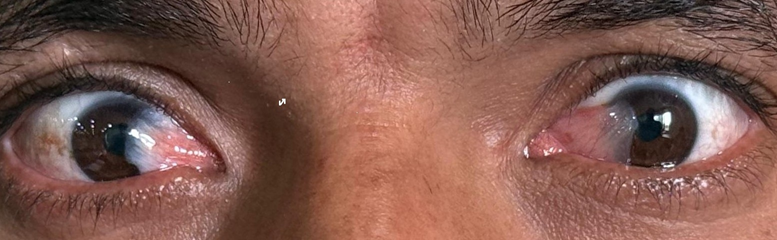
Dense corneal opacity resulting in loss of corneal transparency
Corneal opacity has long been recognised as a major cause of preventable blindness worldwide, particularly in areas with limited access to eye care services. Historically, infections, ocular trauma, and nutritional deficiencies, especially vitamin A deficiency, have been the leading contributors to this condition. The cornea is a transparent, avascular tissue that forms the anterior part of the eye and is essential for focusing light onto the retina. A 58-year-old male presented to a tertiary care hospital with complaints of redness of the eyes, irritation, and diminished vision in both eyes for the past three months. On slit-lamp examination, visual acuity was 6/24 in the left eye and 6/60 in the right eye. Both eyes showed corneal opacity with arcus senilis. The patient had a history of cataract surgery in the left eye two years ago and in the right eye six months ago. He also had a history of chronic alcohol consumption, and laboratory evaluation revealed deficiencies of vitamins A and B. Management and outcome: the patient was treated with topical and oral anti-inflammatory drugs along with corticosteroids, including prednisolone and dexamethasone. After evaluation, the ophthalmologist advised keratoplasty. Keratoplasty is a corneal transplant procedure that replaces damaged corneal tissue with healthy donor tissue. The aims of keratoplasty are to restore vision, reduce irritation and pain, and improve corneal clarity in conditions such as corneal scarring, infection, or keratoconus. Visual recovery occurs over several months and requires careful postoperative follow-up.

Corresponding Author

Dharti Meshram, Department of Mental Health Nursing, Smt. Radhikabai Meghe Memorial College of Nursing, Datta Meghe Institute of Higher Education and Research (Deemed to be University), Sawangi, Wardha, Maharashtra, India (dhartimeshram9@gmail.com)

Article Formats
  • HTML Version View HTML
  • PDF Format
    PDF in process

Articles published in Pan African Medical Journal are Open Access and distributed under the terms of the Creative Commons Attribution 4.0 International (CC BY 4.0).

Open Access Logo

The Pan African Medical Journal (ISSN: 1937-8688) is a product of the PAMJ. The contents of this journal is intended exclusively for professionals in the medical, paramedical and public health and other health sectors.