
eISSN: 1937-8688

Black necrotic second toe in an elderly diabetic female: dry gangrene with autoamputation

Aditi Satish Telrandhe, Anita Santoshrao Wanjari

PAMJ. 2026; 55:111. Published 09 Nov 2026 | DOI: 10.11604/pamj.2026.55.111.53445
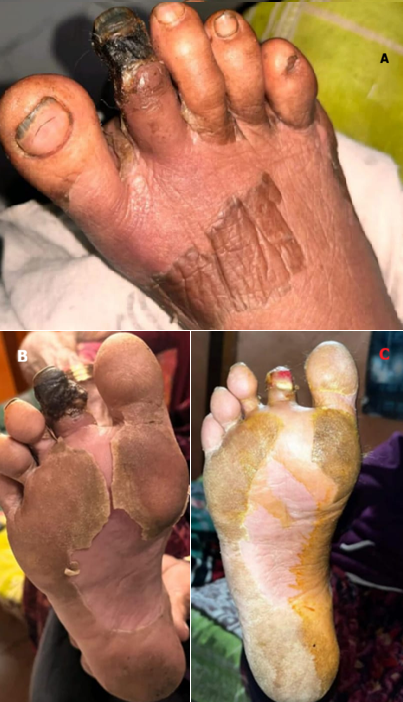
Black necrotic second toe in an elderly diabetic female: dry gangrene with autoamputation
A 72-year-old female presented with blackish discoloration and coldness of the second toe of the left foot for one month. She was a known case of diabetes mellitus with poor glycemic control. The condition initially presented as mild pain in the affected toe, which gradually progressed to discoloration followed by loss of sensation. There was no history of trauma, fever, or similar lesions. On examination, the second toe appeared blackish, dry, and shriveled with a hard, mummified texture. A well-defined line of demarcation separated necrotic tissue from the surrounding viable skin at the metatarsophalangeal joint. Mild edema was noted, and peripheral pulses were reduced. A clinical diagnosis of dry gangrene was made. The patient was managed conservatively considering the stable nature of dry gangrene and the presence of a well-defined line of demarcation. Strict glycemic control was achieved to prevent further progression of ischemia. Antiplatelet therapy was initiated to improve peripheral circulation. The affected toe was kept dry and protected, and regular local wound care was performed to prevent secondary infection. The patient was closely monitored for any signs of infection or conversion to wet gangrene; however, no such complications were observed. Over time, the lesion progressed with extensive necrosis and subsequently underwent auto-amputation at the line of demarcation. The residual stump showed healthy granulation tissue with satisfactory healing. Dry gangrene results from prolonged ischemia and is commonly seen in diabetic patients due to peripheral vascular insufficiency. This case highlights the classical progression of dry gangrene leading to autoamputation.

Corresponding Author

Anita Santoshrao Wanjari, Department of Rasashastra Evam Bhaishajya Kalpana, Mahatma Gandhi Ayurveda College Hospital and Research Center, Datta Meghe Institute of Higher Education and Research, Salod, Wardha, Maharashtra, India (anitawanjari7@gmail.com)

Article Formats
  • HTML Version View HTML
  • PDF Format
    PDF in process

Articles published in Pan African Medical Journal are Open Access and distributed under the terms of the Creative Commons Attribution 4.0 International (CC BY 4.0).

Open Access Logo

The Pan African Medical Journal (ISSN: 1937-8688) is a product of the PAMJ. The contents of this journal is intended exclusively for professionals in the medical, paramedical and public health and other health sectors.