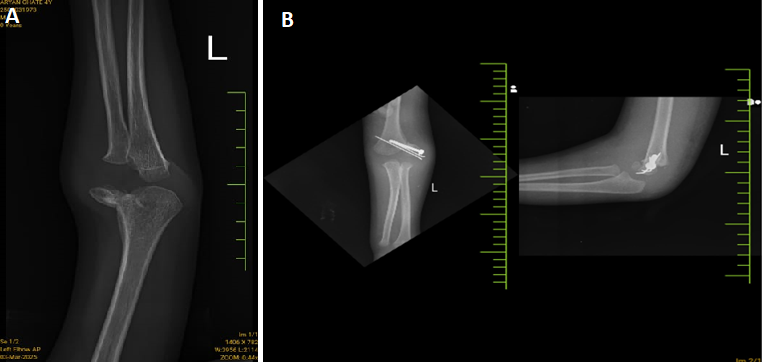
Tardy ulnar nerve palsy is a delayed-onset neuropathy caused by chronic compression or stretching of the ulnar nerve, commonly at the elbow. It often results from malunion or bony deformities following fractures, especially of the humerus and lateral epicondyle. The term "tardy" signifies the delayed appearance of symptoms, which may manifest months or years after the initial trauma. In pediatric populations, supracondylar and lateral epicondyle fractures of the humerus, often due to falls, are frequent. Improper healing may lead to deformities such as cubitus valgus or heterotopic ossification, predisposing children to progressive ulnar nerve entrapment. This report presents a 4-year-old male who developed progressive weakness and clawing of the fourth and fifth fingers of his left hand over two months. Five months earlier, he had sustained a supracondylar and lateral epicondyle humerus fracture from a fall, which was managed conservatively. Over time, his parents observed difficulty in grasping objects and an abnormal hand posture. Neurological examination revealed weakness in ulnar-innervated muscles, reduced grip strength, and sensory deficits along the ulnar distribution. There was no history of re-injury, and the child had normal developmental milestones. Imaging was performed to assess underlying bony abnormalities and nerve entrapment. This case highlights the importance of long-term follow-up in pediatric fractures to recognize post-traumatic neuropathies early. Timely diagnosis and intervention are essential to prevent permanent motor deficits and deformity in growing children.
Corresponding Author
Nikita Gangwani, Department of Musculoskeletal Physiotherapy, Ravi Nair Physiotherapy College, Datta Meghe Institute of Higher Education and Research, Sawangi, Meghe, Maharashtra, Wardha, India (physionikita0107@gmail.com)